Saturday Tech Briefing
Saturday brought a day dominated by overlapping crises: physical warfare hitting cloud infrastructure, a major security meltdown in the AI developer tools space, and a flurry of aggressive moves by AI companies to expand their reach into media, biotech, and politics. It was not a slow news day.
War Hits the Cloud: AWS Zones in Bahrain and Dubai Go Down
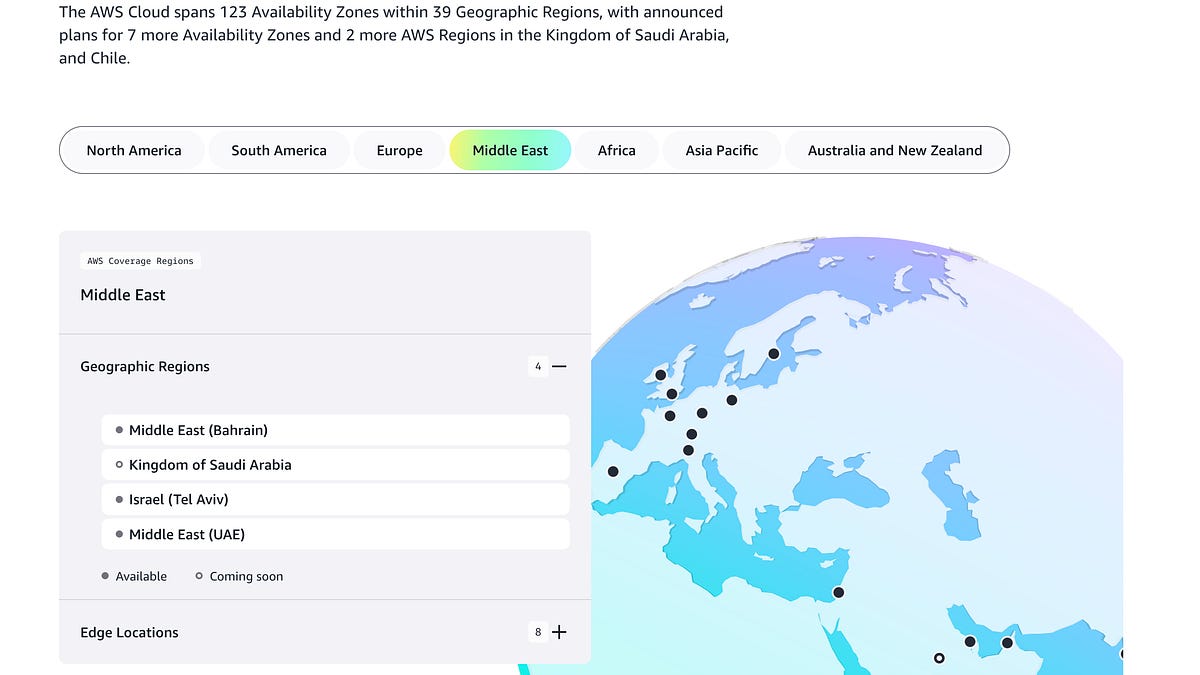 Image via bigtechnology.com
Iranian military strikes have taken out Amazon Web Services availability zones in Bahrain and Dubai, leaving them what sources describe as “hard down,” according to Big Technology. This may be the first time conventional warfare has directly caused a major cloud infrastructure outage. Businesses across the Middle East relying on AWS were forced to scramble for failover options, and the incident exposed a gap that many enterprises likely never planned for: their disaster recovery assumes software failures, not missiles.
AWS has not publicly confirmed the full extent of the damage or provided a restoration timeline. The event sets a sharp precedent for how physical geopolitical conflict can cascade into digital disruption at a global scale. Any company with workloads in those zones and no cross-region redundancy is facing a serious reckoning today.
OpenClaw Security Crisis: Assume Compromise
A critical vulnerability in OpenClaw, the widely used third-party harness for Anthropic’s Claude AI, allowed unauthenticated attackers to silently gain admin-level access to affected systems. Ars Technica recommends that all OpenClaw users treat their systems as compromised until proven otherwise. The flaw is an authentication bypass, meaning attackers needed no credentials at all to reach the highest level of access.
The situation is compounded by a separate but related threat: Wired reports that hackers are redistributing leaked versions of Claude Code with malware bundled in. Anyone who downloaded an unofficial copy of Claude Code this week should treat that machine as suspect. The OpenClaw user base skews toward technically sophisticated developers, which makes the severity of a silent admin-access flaw particularly striking.
Anthropic Cuts OpenClaw Off from Claude Subscriptions
 Image via techcrunch.com
The timing could hardly be worse: on the same day the OpenClaw security story broke, Anthropic announced it is severing the tool’s access to Claude Code subscription limits. Starting April 4, users of OpenClaw and other third-party harnesses can no longer draw on their subscription allowances; they will need separate pay-as-you-go billing. Anthropic cited outsized system strain as the reason, and said the policy will expand to other third-party harnesses beyond OpenClaw.
As a transition measure, Anthropic is offering a one-time credit equal to a user’s monthly subscription price, along with up to 30% discounts on prepurchased usage bundles, per The Verge. For developers who built production workflows around OpenClaw, this is an effective cost increase arriving at the same moment their tool is under a serious security cloud.
OpenAI Buys a Talk Show to Reshape Its Image
OpenAI has acquired TBPN, a streaming tech talk show, in a move CEO Sam Altman framed as a response to what he called his “miscalibration” of public mistrust toward AI companies, according to the New York Times. The acquisition follows OpenAI’s controversial February deal with the Pentagon, which drew significant criticism. Altman’s argument is that the company needs to better shape how AI is understood by the public.
The move puts OpenAI directly in the media business, a notable departure for an organization that describes itself primarily as an AI safety and research lab. Owning a media outlet that covers the same industry you operate in raises immediate questions about editorial independence and the line between public communication and corporate messaging. The precedent it sets for other AI companies is worth watching.
Anthropic Acquires Biotech Startup Coefficient Bio for $400M
 Image via techcrunch.com
Anthropicic’s busy week includes a major strategic expansion: the company has purchased stealth biotech AI startup Coefficient Bio in an all-stock deal valued at approximately $400 million, according to TechCrunch, citing The Information and reporter Eric Newcomer. Coefficient Bio was operating in stealth, so details about its specific technology remain limited. The acquisition signals that Anthropic is moving beyond language AI into life sciences.
Drug discovery and healthcare are sectors where AI is attracting enormous capital, but also where mistakes carry stakes far higher than a bad chatbot response. Anthropic entering this space suggests the company sees its safety-focused approach as a differentiator in high-risk domains, though that claim will need to be proven out over time.
Claude Code Finds a 23-Year-Old Linux Vulnerability
A developer has published a detailed writeup on mtlynch.io describing how Anthropic’s Claude Code autonomously identified a security vulnerability in the Linux kernel that had gone undetected for 23 years. The account details the process Claude Code used to surface the flaw and raises both genuine excitement and caution about AI-assisted security research at scale. Finding a decades-old kernel bug is exactly the kind of high-value, hard-to-replicate result that justifies significant investment in AI coding tools.
The timing creates an ironic contrast: the same week Claude Code is credited with uncovering a serious vulnerability in Linux, the tools built on top of it are themselves at the center of a major security incident. AI systems with deep access to critical software can clearly find problems humans missed, and can also, as the OpenClaw situation shows, become vectors for new ones.
Artemis II Captures Earth from Record Distance
On a lighter note, the Artemis II crew has sent back a striking image of Earth taken as the mission pushed to approximately 10,300 kilometers beyond the Moon, according to the BBC. That makes Artemis II the farthest any humans have traveled from Earth. NASA released the image publicly, and it has the quality of a photograph that gets referenced for decades.
The mission had one small, very 2026 moment early on: a Microsoft Outlook configuration issue that NASA has since resolved, per The Verge. Wired notes that the trajectory engineering behind the mission is itself a remarkable feat. It is a useful reminder that even the most ambitious human endeavors in space still depend on mundane enterprise software configured correctly.
Meta Silences the Author of ‘Careless People’
 Image via thetimes.com
Sarah Wynn-Williams, author of the critical Meta memoir “Careless People,” has been legally prohibited from making negative public statements about Meta, according to The Times. The gag order follows the book’s publication and relies on non-disparagement agreements Wynn-Williams signed as a former employee. The story has become one of the most discussed items on Hacker News today.
The case raises a question with broad implications: how far do corporate non-disparagement agreements extend when the subject matter involves potential public interest? Using legal mechanisms to silence a published author after the fact is an aggressive tactic, and the attention it is drawing may ultimately do more reputational damage to Meta than the book itself.
EFF: FAA Drone Restrictions Are Really About Suppressing ICE Coverage
 Image via eff.org
The Electronic Frontier Foundation argues that a new FAA Temporary Flight Restriction banning drones over certain areas is specifically designed to prevent journalists and activists from filming Immigration and Customs Enforcement operations. The EFF says the restrictions lack a legitimate aviation safety rationale and represent a misuse of regulatory authority to suppress First Amendment-protected newsgathering. The piece has drawn significant traction on Hacker News.
If the EFF’s characterization holds up to legal scrutiny, it would mean aviation law is being used as a proxy tool for controlling press access, a precedent with implications well beyond drone operators or immigration coverage. Courts have generally been skeptical of content-neutral restrictions that have obvious content-specific effects.
Quick Bits
OpenAI Executive Shuffle OpenAI’s head of AGI deployment Fidji Simo is taking several weeks of medical leave, COO Brad Lightcap is being reassigned to lead “special projects,” and CMO Kate Rouch is stepping away to focus on cancer recovery. Wired
Oracle Files H-1B Petitions During Mass Layoffs Oracle is simultaneously filing thousands of H-1B visa petitions and conducting widespread layoffs, a combination drawing sharp criticism. National Today
Meta Pauses Work with AI Data Vendor Mercor After Breach A security incident at Mercor, a key AI training data vendor, may have exposed sensitive details about how major labs train their models; Meta has paused its relationship with the firm while the investigation continues. Wired
TSMC Upgrades Japan’s Kumamoto Fab to 3nm TSMC is upgrading its second Kumamoto facility to a 3-nanometer process, a decision driven more by geopolitical security than commercial logic. The Diplomat
Bipartisan Match Act Targets China Chip Exports U.S. lawmakers have introduced the Match Act, which would tighten restrictions on semiconductor manufacturing equipment exports to China and ban servicing of already-delivered equipment, affecting companies like ASML. AsiaOne
LinkedIn Secretly Scans Your Chrome Extensions LinkedIn has been found to silently scan for more than 6,000 Chrome extensions installed in users’ browsers and collect related data. Bleeping Computer
Anthropic Launches a Political PAC Anthropic has formed a political action committee to back candidates who support its policy agenda, entering the political arena as AI regulation becomes an increasingly contested issue. TechCrunch
H.264 Streaming License Fees Jump 45x The firm managing H.264 licensing has raised annual streaming fees from $100,000 to $4.5 million, a shock increase that could accelerate adoption of open codecs like AV1. Tom’s Hardware
Abu Dhabi Quietly Owns a Piece of Insight Partners A new lawsuit and SEC filings reveal that Abu Dhabi’s government holds a stake in Insight Partners, one of the world’s largest VC funds managing over $90 billion, through a private firm called Lunate. Forbes
YC Quietly Removes Delve from Its Directory YC-backed startup Delve has been removed from the Y Combinator company directory with no public explanation, prompting significant speculation. Y Combinator
Lenovo Legion Go 2 Price Surges $650 Lenovo has raised the price of the Legion Go 2 gaming handheld by $650, citing a sharp spike in RAM costs that some are calling “RAMageddon.” The Verge
People Prefer Amazon Warehouses to Data Centers as Neighbors A new poll finds residents would rather live near an Amazon fulfillment center than a data center, reflecting growing concern about data center noise, water use, and energy consumption. TechCrunch
Meta, Microsoft, and Google Are Building Natural Gas Plants for AI All three companies are commissioning large natural gas power plants to meet surging AI data center demand, sitting awkwardly alongside their stated climate commitments. TechCrunch
Run Linux Containers on Android Without Root A new open-source project called Podroid lets Android users run Linux containers without root access, using Android’s built-in virtualization capabilities. GitHub