Friday brought a heavy mix of AI competition, hardware security scares, and uncomfortable questions about who controls the tech narrative. The AI model wars heated up significantly, with Microsoft, Google, and Cursor all making major moves in a single day. Meanwhile, a new Rowhammer attack targeting Nvidia GPUs cast a shadow over the infrastructure powering much of the world’s AI compute.
Microsoft Launches Three In-House AI Models, Challenging OpenAI
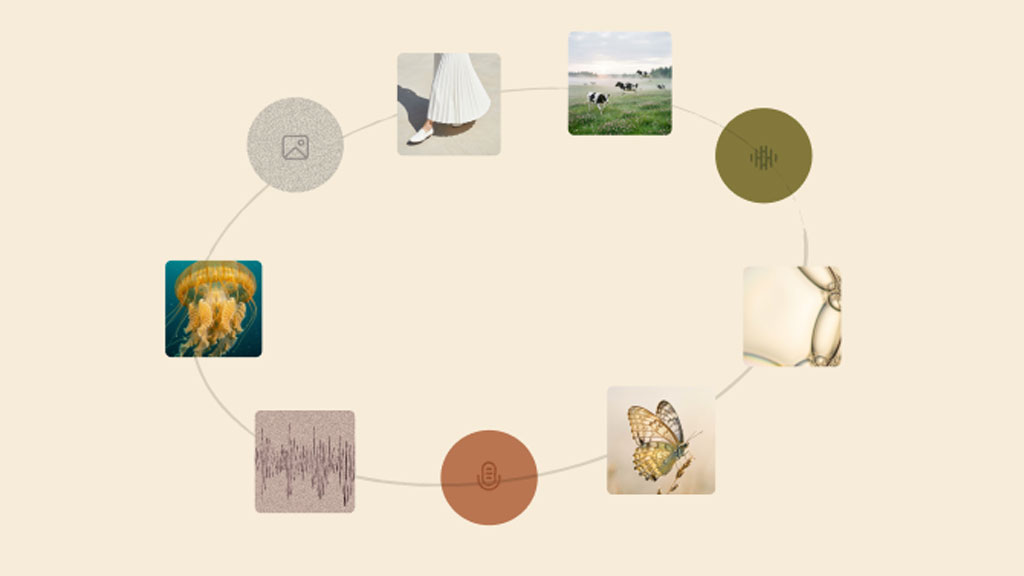 Image via microsoft.ai
Microsoft announced three new models under its MAI brand: MAI-Transcribe-1 for transcription, plus two models covering voice and image generation. All three are available starting today through Microsoft Foundry, with a MAI Playground available for US-based developers to test them directly.
The move is significant because Microsoft has spent years as OpenAI’s primary backer and distribution partner, integrating OpenAI models throughout its product line. Building its own model stack signals that Microsoft wants more control, lower costs, or both. VentureBeat reports the models are positioned as direct competition to offerings from both OpenAI and Google.
The long-term implications for the Microsoft-OpenAI partnership are unclear. Microsoft has invested heavily in OpenAI, but a company of Microsoft’s scale has every incentive to reduce dependency on a single external supplier. Developers and enterprises now have a Microsoft-native alternative to evaluate.
Google Releases Gemma 4, Its Most Capable Open-Weight Model Yet
 Image via mashable.com
Google launched Gemma 4, an open-weight model built on the same underlying technology as Gemini 2. The 27B parameter version can run locally via Ollama on personal hardware including Apple Silicon Macs, and Nvidia confirmed Gemma 4 is already available on Jetson developer hardware.
Open weights matter because they allow developers to fine-tune and deploy the model anywhere without sending data to Google’s servers, which matters for privacy-sensitive applications. The ability to run a Gemini-class model on a laptop without cloud costs is a meaningful shift in what’s accessible to independent developers and researchers.
Setup guides for running Gemma 4 locally were already circulating on Hacker News shortly after the announcement, suggesting strong developer interest. This release puts pressure on other labs to match Google’s openness or justify why their models remain closed.
Cursor 3 Brings Autonomous Multi-Repo AI Agents
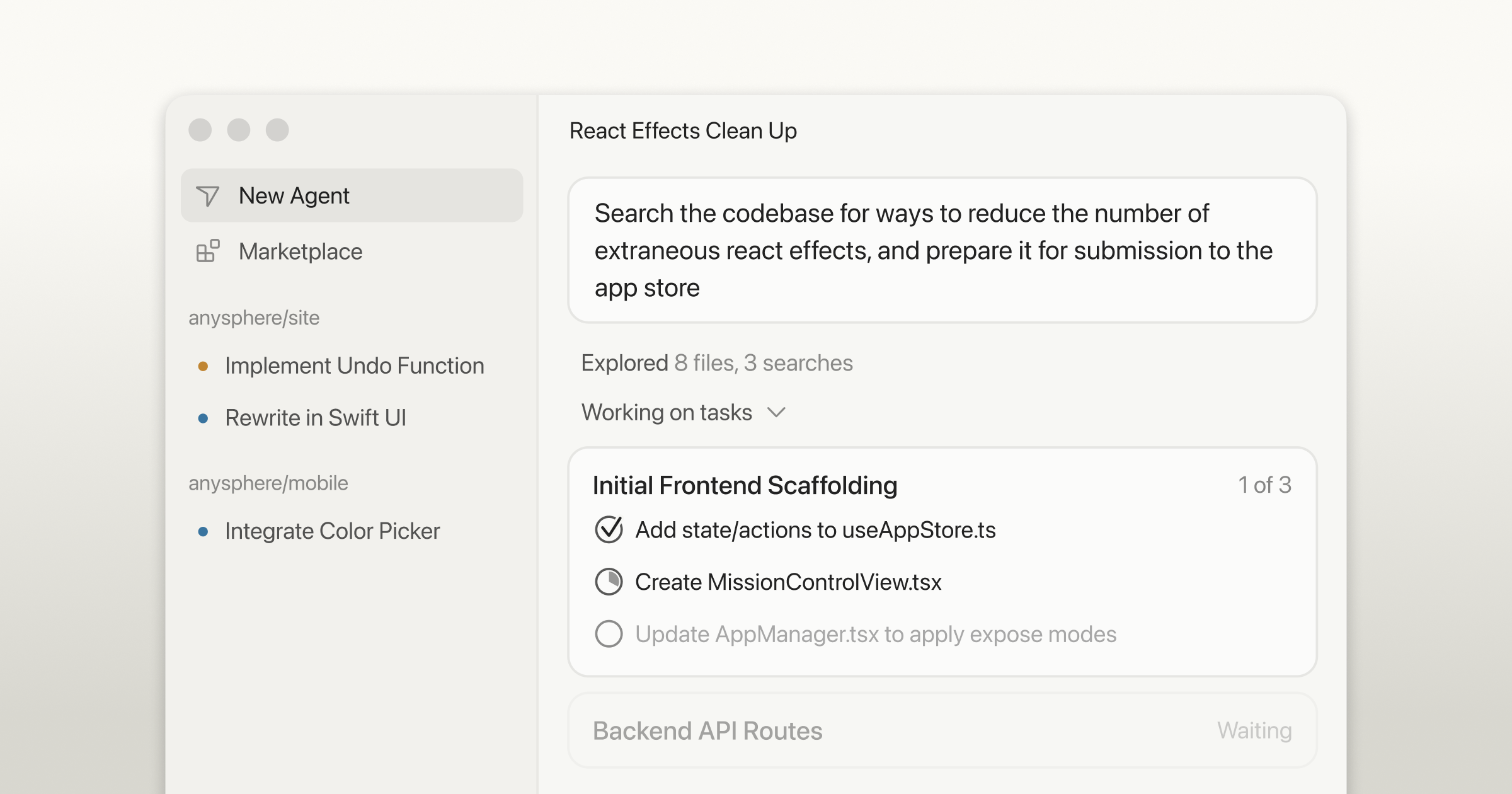 Image via cursor.com
Cursor launched version 3 of its AI coding tool, introducing an Agents Window that lets developers describe tasks in plain language and dispatch multiple AI agents across different repositories at the same time. The agents work autonomously, without requiring manual coding at each step, and developers can track all of them in parallel.
This is a meaningful architectural shift. Previous AI coding tools operated primarily as suggestion engines sitting alongside a developer. Cursor 3 moves toward autonomous execution across codebases, putting it in direct competition with Anthropic’s Claude Code and OpenAI Codex in the agentic coding space. The launch is today’s most-discussed story on Hacker News, with 372 comments at time of writing.
For professional software developers, the shift from suggestion to autonomous execution raises questions about oversight, error correction, and accountability when agents make wrong decisions across multiple repos simultaneously. Those tradeoffs will be tested in practice over the coming weeks.
New Rowhammer Attacks Give Full Control of Machines Running Nvidia GPUs
 Image via arstechnica.com
Security researchers have demonstrated a new class of Rowhammer attacks capable of achieving complete system compromise on machines equipped with Nvidia GPUs, according to Ars Technica. Rowhammer exploits physical bit-flip vulnerabilities in DRAM by repeatedly accessing memory rows to corrupt adjacent data, and GPU-adjacent memory has historically received less hardening than CPU memory.
The practical blast radius here is large. Nvidia GPUs power a substantial portion of global AI infrastructure, from cloud data centers to research workstations. A full system compromise attack against that hardware class is not a theoretical concern.
No patch is available at this time. Organizations running Nvidia GPUs in sensitive environments should monitor for mitigation guidance from Nvidia and their hardware vendors. The attack underlines a recurring theme: as AI compute scales up, the security posture of that infrastructure becomes a critical systemic risk.
European Commission Hack Blamed on Cybercrime Gangs
 Image via techcrunch.com
CERT-EU has attributed a major breach of the European Commission to the cybercrime group TeamPCP, and linked the subsequent public leak of stolen data to ShinyHunters, a gang with a track record of publishing stolen datasets rather than simply ransoming them. No ransom demand has been publicly confirmed.
ShinyHunters’ history is relevant here. The group has previously released data from major breaches rather than keeping it private, meaning affected individuals and staff whose data passed through European Commission systems face elevated exposure risk. The incident is a significant compromise of EU institutional infrastructure at a sensitive political moment.
The breach also arrives as the EU faces separate criticism for allegedly softening its digital regulation enforcement under US pressure, adding to a difficult week for European institutional credibility on technology matters.
Bipartisan Bill Targets Chipmaking Tool Exports to China
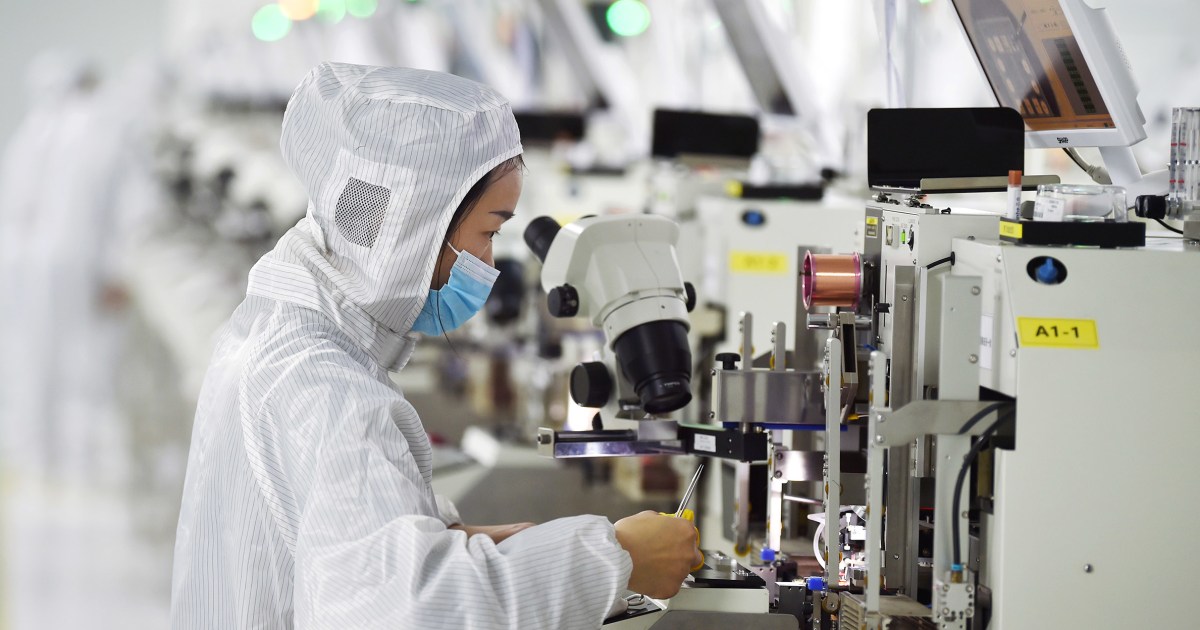 Image via nbcnews.com
US House lawmakers have introduced a bipartisan bill that would tighten export controls on semiconductor manufacturing equipment sold to China, targeting companies including ASML and Tokyo Electron. The legislation extends existing pressure beyond finished chips to the tools required to manufacture them. A companion Senate bill from Senators Ricketts and Kim is expected when Congress reconvenes.
The timing is pointed. CNBC reports that Chinese chipmakers including SMIC and Hua Hong just posted record revenues for 2025, suggesting current export controls have not yet choked off Chinese semiconductor momentum. The new bill represents an attempt to close that gap by targeting the upstream tooling layer.
ASML and Tokyo Electron are among the most exposed companies if the bill passes, as China is a significant revenue source for both. Investors in those firms and downstream supply chain participants are watching closely. Broader consequences for global semiconductor supply chains would depend on how tightly the controls are written and enforced.
Anthropic Accidentally Leaked Claude Code’s System Prompt

Anthropic briefly exposed the complete system prompt underlying its Claude Code AI agent, giving competitors and security researchers a detailed look at how the model is configured for agentic coding tasks. Copies spread online before Anthropic moved to remove them, meaning the information is effectively public despite the company’s efforts.
System prompts are typically treated as proprietary. They encode the behavioral constraints, persona, and operational logic that shape how a model acts, and they represent meaningful intellectual property for AI labs. This kind of accidental exposure gives rivals a rare window into Anthropic’s product decisions.
The incident also raises questions about internal security practices at AI labs handling sensitive model configurations. As these companies build increasingly capable autonomous agents, the security of the instructions governing those agents becomes its own critical concern.
OpenAI Acquires Founder Talk Show TBPN
 Image via techcrunch.com
OpenAI has acquired TBPN, a founder-focused business talk show popular in Silicon Valley, to be overseen by the company’s chief political operative Chris Lehane. OpenAI says the show will operate independently.
Wired characterizes the move as an attempt to purchase favorable coverage at a moment when OpenAI faces sustained criticism over its corporate structure, safety practices, and political influence. The acquisition of media properties by subjects of news coverage is a pattern with a troubled history for editorial independence, regardless of stated intentions.
For anyone consuming tech journalism, the acquisition is a useful reminder to track who owns the platforms distributing tech commentary. TBPN’s founders and editorial team will face immediate credibility questions about whether independent criticism of OpenAI remains possible under the new arrangement.
AI Chatbots Are Now Prescribing Psychiatric Medications
 Image via theverge.com
A new report from The Verge documents AI chatbots being used to prescribe and refill psychiatric drugs. Regulators have not yet established clear rules for AI-driven prescribing, leaving a significant gap between what these systems are doing in practice and what governance exists to oversee them.
Psychiatric medications carry real risk profiles. They require monitoring, dosage adjustment, and clinical judgment about patient history and context. The question of whether a chatbot can adequately replicate that judgment, or whether it is being deployed in lieu of adequate human clinical access, is urgent and largely unanswered.
Patients seeking mental health treatment, the clinicians whose roles may be circumvented, and anyone concerned about AI liability in healthcare are all directly affected. This is a story that will accelerate regulatory attention in the near term.
Quick Bits
axios npm package hit by supply chain attack A post-mortem on the axios GitHub repository details a supply chain compromise of the widely used HTTP library. Developers relying on axios should review their dependency versions immediately.
Oracle cutting thousands of jobs Oracle employees began receiving layoff notices this week, with thousands of positions affected as the company redirects spending toward AI infrastructure. Oracle’s stock rose more than 4% on the news.
Amazon adds fuel surcharge for third-party sellers Amazon is imposing a temporary 3.5% fuel and logistics surcharge on third-party sellers, citing energy market disruptions tied to the Iran conflict. No end date has been announced.
SpaceX in talks for $5 billion Saudi investment ahead of IPO Reuters reports SpaceX has held discussions with the Saudi sovereign wealth fund about a $5 billion investment tied to a potential IPO, with the company targeting a $2 trillion valuation.
ElevenLabs launches AI music generation app ElevenLabs released ElevenMusic, an app for creating and remixing songs using text prompts, marking the company’s expansion beyond its voice synthesis origins.
Hims & Hers confirms customer support data breach The telehealth company says hackers stole customer support ticket data over several days in February after compromising its support system.
Noon raises $44 million for AI-native product design tool Noon emerged from stealth with $44 million in funding, reportedly the largest stealth funding round in the design software space.
EU accused of caving to US pressure on digital rules Critics and MEPs are accusing the European Commission of softening its digital regulation enforcement under pressure from Washington, with Politico calling it a “fatal decision” for regulatory sovereignty.
NHS staff refusing to use Palantir-built data platform A significant number of NHS staff are declining to use the Federated Data Platform due to ethical concerns about Palantir’s involvement, complicating the UK government’s health data ambitions.
Granola AI note-taking app shares notes publicly by default Anyone with a link to a Granola note can view it by default, and the app uses notes for AI training unless users opt out. Many users may not be aware of either setting.
CBP facility security codes apparently leaked via Quizlet flashcards WIRED found what appear to be sensitive Customs and Border Protection gate security codes posted as public study flashcards on Quizlet, discoverable through a basic Google search.
Tesla Model X and S near end of production TechCrunch reports the Model X and Model S are in their final days, with Tesla betting its future on the Cybercab robotaxi and Optimus humanoid robot, neither of which is yet in production.
Reddit is deprecating r/all Reddit is moving away from r/all, the catch-all feed that surfaced the platform’s most upvoted content across every community, as part of broader changes to content discovery.
Google’s new data center to be powered by large natural gas plant Documents reviewed by Wired show a new Google data center will draw power from a natural gas facility emitting millions of tons of CO2 annually, highlighting the gap between Big Tech’s climate pledges and its actual energy footprint.
AO3 exits beta after 17 years Archive of Our Own, the fan fiction platform hosting over 13 million works, has officially exited beta testing, 17 years after its 2008 launch. Better late than never.